ResponderSafety.com Podcast

The Emergency Responder Safety Institute presents the ResponderSafety.com podcast, a closer look at hot topics, new information, innovative approaches, and case studies in responder safety at roadway incidents and in traffic incident management. Listen for practical, actionable information you can implement today at your next roadway incident response to improve safety of emergency response personnel and the public, no matter which agency you work for. Come learn from interviews and special features with experts and leaders in emergency services. All agencies who respond to roadway incidents — fire, EMS, fire police, law enforcement, DOT, safety service patrols, special traffic units, medevac, and towing and recovery — are all welcome and will find value in what we discuss.

Rod Ammon: Welcome to The ResponderSafety.com podcast, brought to you by the Emergency Responder Safety Institute, a committee of the Cumberland Valley Volunteer Firefighters Association. To remain mindful of why we do this work, we start every podcast with an update of emergency responders struck-by fatalities. In 2025, 35 emergency responders were struck and killed while assisting the public on the roadway. We have information on the loss of these responders and a memorial tribute at respondersafety.com/fatalityreports. Our thoughts are with their families and colleagues. Please visit respondersafety.com for more than 150 resources and training that will help you operate more safely at roadway incidents, and educate the public about how to safely avoid and pass an emergency scene on the roadway. If you're aware of an incident where an emergency responder or emergency response vehicle was struck while working a roadway incident scene, please report it to us at reportstruckby.com. Your reports provide crucial data that helps us identify why struck-by incidents occur, and design new training and resources to mitigate those contributing factors. You can remain anonymous. Over five years in the mid 2010s, nine Irving Fire Department apparatus were struck by civilian vehicles when working roadway incidents in Texas. Two apparatus were totaled, and several firefighters were injured, one driver was killed. When Irving Fire Chief Victor Conley was tasked with a community risk reduction research project as part of the executive fire officer program at the National Fire Academy, he knew exactly what he wanted to address. He thought that there might be a better way than putting millions of dollars in equipment between Irving firefighters and oncoming traffic. With the high cost of apparatus, the long timelines for repair and replacement, and the risk to the department and community when apparatus were out of service, he reasoned that there should be a less costly way to protect firefighters and other emergency responders. That thinking and an investment of about $3,500 created the Irving Fire Department's Blocker Equipment Program. Instead of auctioning off their old reserve pumpers, Irving FD repurposes them into blocking vehicles. The first blocking unit, Blocker 12, was placed in service in October of 2017. The program has been a success and continues to operate today. Chief Conley is here to tell us about it. Victor Conley has been with the Irving Fire Department since 1986, and was appointed fire chief in 2014. He supervises over 430 employees, and a budget of more than 75 million. He has served the department in many capacities, including high angle rescue technician, hazmat technician, training officer, paramedic, and dispatch supervisor. Irving is a large busy city of 250,000 in the Dallas-Fort Worth metroplex. Chief Conley, it's great to have you with us. Responder Safety has highlighted Irving's blocker program before, but this is our first opportunity to discuss it on the podcast. Thanks for coming on.

Victor Conley: Yes, sir. Absolutely. I'm glad to be here, and appreciate the opportunity to reach out to your audience and share some of our experiences here in Irving. Hopefully we can help out some other departments, and they won't have to go through what we've been through in the past.

Rod Ammon: I believe you will. Joining us for the conversation is Jack Sullivan, the director of training for the Emergency Responder Safety Institute. He retired from active firefighting as a lieutenant and safety officer with Lionville Fire Rescue in Pennsylvania, and has 25 years experience with fire and emergency medical services in three different fire departments, including time as a deputy fire chief. Jack is nationally recognized for his work on roadway incident safety for emergency responders, and has served on the National Committee of Uniform Traffic Control Devices, and the NFPA 1091 Technical Committee. Jack, it's always great to have your expertise as we navigate these safety conversations. Jack, you and Chief Conley have worked together on this topic of blocking vehicles for many years. Why don't you take the lead?

Jack Sullivan: Thanks, Rod. I don't think I'm the one that's been doing all the work though. I think Chief Conley's done the work. All I've done is tout some of the things that they've been doing in Irving, which I think is taking the lead on some things that could be done around the country. I'm glad the chief has a little bit of time to spend with us today. You kind of laid out how this program got started initially, but Chief, why don't you give us a little bit of an idea of how you decided to use decommissioned apparatus at the very beginning of this effort?

Victor Conley: Yeah. Thank you, Jack. In a way we put a lot of thought into it, and the conclusion I came up to is I needed resources that I could put my hands on. I've heard of recommendations to use dump trucks or concrete trucks or different apparatus vehicles, but most of those are not within my department, and to wait on another department to get through using something in order to transition it into a traffic management apparatus, it just wasn't working out for me. Meanwhile, we were going through a transition of trying to update a lot of our apparatus. We'd gotten behind schedule a little bit, and so I thought that would give me a good opportunity. They already had the emergency flashing lights and all the decals that we normally use on a highway, it's just these apparatus were 15 to 20 years old, some of them older than that, 26, 28 years old, and they were past their life. The city had gotten all the use they could out of them, so I just thought, "Well, I'll repurpose those apparatus. It would be a simple transition, be a low cost for my city." They're already maintained. We got maintenance records. It's just another step in the life of a fire apparatus. When we buy new ones, of course we put them at frontline, and then the frontline moves to a reserve status, now they go to a traffic management status before they go to auctions. We're still auctioning off equipment, but we're utilizing them a few more years before we get there, so it's just another step in the process.

Jack Sullivan: I think that auction piece is an important part of what you folks did down there. I know in the past, as the apparatus came out of frontline service, you typically sent it to auction, and in your study on this particular process, you came up with some values there. I think it's important for people to understand what the trade-offs were value-wise. Can you help us understand what you got at a typical auction for the apparatus?

Victor Conley: Yeah, a couple things. It just gave us a better return on investment for our equipment. The first thing is these pieces of equipment were being auctioned off between three to $5,000, and so I thought we could use these apparatus a little bit longer and serve our emergency operations a little better. It gives us another layer. I should say back in the early part of 2000, early 2000s, first part of the teams, we were sending out on our thoroughfares ... We've got quite a few thoroughfares running through Irving. I'm going to say roughly 3,000 lane miles of highways and state highways, interstate highways, loops, hazardous material routes, and so we've got a lot of highways coming through the city of Irving, and we were having a lot of equipment hit, taken out of service either for repairs for up to nine months to a year, to just being totaled, and then having to go through the insurance claim and reorder. Of course, everybody knows the challenges we go through now with ordering apparatus. It takes anywhere from 36 to 50 months to get a piece of equipment now, so the last thing you want to do is get a piece totaled and be without a backup unit. Our return on investment for these apparatus, so a couple things. One, very low in service. We changed the graphics. We have custom signboards made right here in the city where it's just DOT-approved air boards that go on three sides of our apparatus. I don't worry about the air condition working or any of the creature comforts within it, but as long as it runs, maintenance stays at a low cost, we keep that piece of equipment in service. Then we've added signboards on the top of these apparatus where we can rotate them 180 degrees to get our lights above, what we call the circus lights on scene to try to get the driver's attention. That has helped quite a bit actually. We've had fewer incidents, vehicles striking ours. In the past, since '17, we've probably been hit close to 30 times on these interstates, and I've had three blockers totaled all by drunk drivers, of course, two in the morning they hit them going wide open. So instead of auctioning this equipment, this equipment off at three to $5,000, when these pieces were totaled, the Texas Insurance through the city was paying $50,000, and so we rolled that right back into maintenance of our program. The city has come out way ahead on this program. I keep the costs low by using old apparatus. I'm not buying. I know that since the program came out in '16, '17, there's been ... TxDOT is selling vehicles now. People are making vehicles to put out there to block. That kind of defeats the purpose, in my opinion, but anything we can do to protect our people and our million, $2 million pieces of equipment, it's all good. But when you go spend two, three, $400,000 on another one to get hit, once again, I just feel like it defeats the purpose, but everybody's got their own creativity, how they want to roll the program out. As I tell them, hard part is coming up with the idea, the easy part is modifying it to meet your needs. So I encourage them to modify, do what they have handy, anything to protect their investment, community investment and apparatus, and primarily the personnel on scene. It's amazing to see all the different reasons the public gives you for why they need to get around your scene when they're not involved in it. I try to tell them, I say, "Well, just thank God you're not involved in the scene, and just remember there's people trying to help other people, and for you to drive through there at a high rate of speed or because you got to get somewhere, it's secondary."

Jack Sullivan: Unfortunately, that's an issue we're dealing with nationwide. It's not just in Texas by any means.

Victor Conley: Yes, sir.

Jack Sullivan: I think the cost benefit of the program that you've got there in Irving is what makes you a genius in coming up with this idea. I got to tell you, is I tell people around the country, and travel and speak at conferences and whatnot, and highlight the program in Irving, one question comes up almost every time from somebody in the audience. They want to know what, if anything, you put in the water tank in the blocker vehicles. So go ahead and describe that.

Victor Conley: Well, I tell you what, I'll have to think of the name of the product. We've got a policy. I'm more than happy to share it with any of your viewing audience, but-

Jack Sullivan: My notes here say it's Zapzorb.

Victor Conley: It's what? I'm sorry.

Jack Sullivan: Zapzorb.

Victor Conley: It's the stuff that's in baby diapers.

Jack Sullivan: There you go.

Victor Conley: Yeah. It's easier for me to remember that way. It's a poly, and I've got it in my policy of what we put in there, but it's a poly, and I'll find the name of it here shortly, but it's the stuff that's in baby diapers. The reason we do that is because we want the weight of the water in the tank, that adds additional weight, but it keeps it from leaking out. If you cut the tank and fill it full of sand, like some of our neighbors have done, now that piece of equipment can no longer be auctioned off as a pumping apparatus because you've ruined the tank or you've filled in the pipes with something else where you're giving yourself weight. But for us, we can flush this stuff out, the pump is still good, the tank is still good, and anybody can go refurbish some of these old apparatus and use the pumps again. So that's why we chose to use this product in the tank.

Jack Sullivan: Yeah. I think one of the things we'll do with this podcast is we'll have a list of resources that you've used to convert these vehicles to blockers that we'll make available to the folks that listen to the podcast, so that they'll have the name of that product if they need it.

Victor Conley: Yeah. I'm going to find it for you here in a sec.

Rod Ammon: I think you already gave it to us, and we're going to have it as a link on the podcast page at Responder Safety Learning Network.

Victor Conley: Okay. Okay.

Jack Sullivan: It's incredible. That's the one question that comes up almost every time I talk about your program down there.

Victor Conley: Yeah.

Jack Sullivan: So now you got the blockers, and I'm not sure how many you've got in service at this point. The last count I heard was around five. Tell people how you house them and how you respond them to incidents.

Victor Conley: Yeah. So we have five ladder trucks. I tie a blocker to every ladder truck. What we've done in the past is the ladder truck was the blocking vehicle back in the early 2000s. Now I've tied the blocker units to the ladder trucks, and when they're dispatched onto the highway, they take the blocker, the firefighter gets off the back of the ladder truck and follows them in the blocker. When they arrive on scene, of course, the officer dictates where they're going to set that blocker up so that the traffic can see it, whether it's on top of hill, on a corner, or close enough to keep people from dipping into the shadows. Once the blocker is set, the signboard on the back is raised, either the verbiage of slow down or move over or just an arrow, we can change whatever we need to do at the top of that. Once all that's set up, then the firefighter exits the vehicle within the shadow, and goes and gets on the ladder truck for safety reasons, if they're not needed on scene for extrication or additional personnel. I've also added a battalion chief to some of these scenes so he can sit of off the roadway and view the whole incident and be incident commander because we had a firefighter hit. It's probably been five, six years ago now. He was actually hit, and we had the roadway blocked, but a vehicle came the opposite direction and they weren't prepared for that, so now we ... it's a live living document, so we change it based on some of the emergencies that we see, and update it as needed. Hope that answers your question.

Jack Sullivan: Yeah. Yeah. I think one of the things that people are curious about is you've got the five blockers that are out there now, and you've mentioned that three of the blockers have been totaled since you started the program.

Victor Conley: Yes, sir.

Jack Sullivan: What happens when one of these blockers is totaled, do you go without it for a period of time or do you have another set of reserves that you can dip into? How does that work?

Victor Conley: Yeah. Currently, I have a backup blocker that goes in service when one of them is taken out of service for mechanical reasons, or if one's totaled we'll move it into that place. We also prioritize our backup apparatus. Our oldest, first to be replaced backup fire apparatus, if we don't have any other blockers, we will move it into a blocking status. I guess you could say that's the first one on the food chain that we're willing to lose if it gets hit and totaled as well, but we try not to go without blockers. Now we have in the past gotten down, and I start eliminating based on run volume for each one of the blockers. Of course, we've got three of our five blockers are stationed on the highway, and I never take those out of service. I may have to rotate blockers around to make sure they're covered, but we've got two interior in the city that also respond up on the highway. So that's kind of the way I work my backups if I have one totaled. We've got apparatus staggered so much. We order apparatus every year. We're just now getting to the point where we're caught up from COVID, where we're starting to get apparatus every year, and as we get them in, even if I don't have one that goes down, but it's given us mechanical issues based on our maintenance and acquisition flow chart we use, we will move that into the auction status, and move one of our other backup into the blocker role status. It's constantly moving. That's the beauty of the program, is the boards that we have made, custom-made on these blockers, they're real easy to take off and move to another apparatus, so you're not constantly buying new sign boards or new ... The boards that come up in the bed rotate 180 degrees. We got those built on C-channel and angle iron frames where they bolt down to the bed, but they can be unbolted and moved to another apparatus.

Jack Sullivan: And you can make all those changes with your own fire mechanic shop?

Victor Conley: Yes, sir.

Jack Sullivan: Yeah, that's good.

Victor Conley: Yeah.

Jack Sullivan: That's good. So some of these blockers that have been hit and not totaled, are you concerned about the damage that's done to them? Do you put an insurance claim in for that, or do you do repairs on them? How do you handle just minor damage?

Victor Conley: We do turn in insurance claims. They do go after the responsible party, and they reinvest that money back into the maintenance of our fire apparatus. If the apparatus can still go down the road, I have no problem sticking it back on the road. It's kind of been a change in mindset because our firefighters are really good at keeping equipment clean and in order, and fluids changed and everything up to participants. It was difficult for them at first to leave a damaged vehicle out there.

Jack Sullivan: I can imagine.

Victor Conley: Yeah. So for example, we border Fort Worth on the west side, Dallas on the east side, but on the west side we tried to tell some Fort Worth police officers to move inside the blocker, and the first time we told them, the officer told our officer, "That's okay. We'll be fine." And within 30 minutes, his trunk was sitting in the front seat, and he told my fire officer, "I probably should have listened to you." Luckily, he wasn't in the car. The next time they responded, sure enough, our blocker got hit right behind the rear duals, took out that whole compartment, hit it really well. But what I did is I told them, "Get a piece of sheet metal, put it over it, paint it red, get it back out on the highway." So that's what we did. We lost a compartment, but we carry quite a few items on these blockers from oil sorb to sweeps, to flares, things we might ... We even, I guess it's been two sessions ago, state legislature got a bill passed, Governor Abbott signed it into law where we could move these vehicles. Before that, firefighters were not protected for additional damage to vehicles if they tried to move a vehicle. Funny thing is we had some police officers fight against us moving those vehicles because they want to show up and do their investigation.

Jack Sullivan: Common problem around the country.

Victor Conley: Yeah, so we worked with our local police department. We've got it in our new procedures, updates on how the fire officers got to take pictures of the scene, and a database they load them up to so the police officer can pull the pictures right off, and continue the investigation without the hazard remaining on the highway. So we put some grade 8 chains and straps, and come-alongs so we can move these vehicles off the roadways if they're not EV vehicles and recharge. We'll move them off the highway, and that way the wrecker service is not sticking out there on the highway exposed as well.

Jack Sullivan: Good.

Victor Conley: It's been a good program.

Jack Sullivan: Your department has actually provided us with a list of the equipment that you put on these blockers that we'll share with the listeners when this podcast gets published and whatnot, so they'll be able to relate to the kind of equipment, and where you're getting it, and what you're using and whatnot.

Victor Conley: Awesome.

Jack Sullivan: So program's been in place since 2017. As Rod mentioned at the very beginning, it's been considered a success. Would you agree?

Victor Conley: Definitely. My boss, he appreciates it as well because, like I said, we've lost and we've had ladder trucks totaled, we've had battalion chief vehicles totaled, and since the program's been put in place, we've not lost a frontline of piece of equipment to date, knock on wood.

Jack Sullivan: And you haven't lost any firefighters either, right?

Victor Conley: Have not. We had the one firefighter hit from a lady going the wrong direction. But now we create a barricade, anytime firefighters are cleaning up the roadway, they got to stay within the barricade. So we may reposition fire apparatus or blockers or call an additional blocker out and block the scene both directions, where firefighters can clean the scene up and not be exposed to another hazard. We've also left blockers on scene for police department to do investigations when they shut down highways or shut down lanes and do investigations. Well, we'll leave them out there set up, and if it's going to take a long time, we'll get back in service, and when they get through, they'll call us back to pick it up and take it back to the station. So that's worked really well.

Jack Sullivan: We're jumping around a little bit, but you've mentioned twice now the incident with the wrong way driver. I was going to bring that up a little bit later in the podcast, but let's talk about that now because I think that was an eyeopener. I remember when you called and told me about that, and I was just shaking my head going, "I can't believe we got to deal with something else at this point." Now we got to think about drivers coming from the opposite direction of where we've set up all of the roadway safety procedures and techniques, and strategies and everything else. Go ahead and tell the audience what happened in that situation.

Victor Conley: Well, in that situation, we had an incident on the roadway that was scattered. There was multiple vehicles involved. It was scattered two to 300 feet down the highway, bumpers, parts. No cars were on fire, but there was parts all over the road, and so we had shut down the roadway, and the firefighters are out trying to get most of the debris out of the lanes of traffic so we could get everything opened back up. And a lady who was intoxicated got on the roadway several exits down, was traveling, best estimate is 55 to 60 miles an hour. She never slowed down, hit our firefighter right center over the hood, threw him up over the car. I think he went about 100, 102 feet down the highway. We were all scared of death, of course, but he had some injuries that kept him out of operations for about three to four years. He's now returned to the station. Because at first we thought, "Wow, this guy survived that hit with nothing wrong," but as he started putting weight on he started having troubles with his ankles, his knees, his shoulder, all on the same side that he got hit from, and they had to go and do repairs, including his hip as well. But kudos to him, he's returned to service. He wants to be a firefighter. He will not go out on disability. He's that hardheaded. But the lady was arrested, of course, and charged and stopped right there. Now, of course, we had to go back and update our policy to where we create a safe zone from both directions, and if it's after, I think it's like after 10 or 11 o'clock at night, then we require some of our EMS supervisors to get on top or at roadway exits down so we can keep eyes on the street to see if there's any cars coming the wrong direction.

Jack Sullivan: Yeah, I think that's amazing. I read your emergency operating guidelines for traffic incident management, and those features that you've included in your EOG is unique, I think, to any other standard operating procedures or guidelines that I've seen around the country. You are not the only department who has experienced the wrong way driver coming into an incident scene, and I guess it's an issue that we need to highlight more and talk more about, because I know there are departments that have not considered the possibility of somebody approaching their incident scene, especially when the road is closed.

Victor Conley: Right.

Jack Sullivan: How often do we hear that, just close the road and that'll make everything safe? Nuh-uh, it's not the situation at all, and your crash that you just described is a good example. So we'll share the EOG with others in the podcast notes when we publish it so that they can see what the wording is that you use. I think it's spot on and covers exactly what we need to think about. I'll tell you another issue that's started to rear its ugly head again are median crossovers, and unauthorized people using a crossover to get from one side of the highway to the other and finding themselves in the section that's been closed off for an emergency incident, and driving through the incident scene.

Victor Conley: Wow.

Jack Sullivan: The motorists are more creative than we are, I think, in some cases with some of this stuff that we've got to go through, but I think some of the listeners will appreciate the heads-up on the incident that you had with the wrong way driver. That's something that we all need to be thinking about.

Victor Conley: Yeah. We actually, after that incident happened, we went back and did an open records request on PD. And for the previous 30 days, just one month, 30 days, they had actually caught 11 people driving the wrong direction on the highway, in one 30-day period. So if you caught 11, how many did they not catch?

Jack Sullivan: Exactly. Yeah.

Rod Ammon: So just to clarify for me, because I'm very visual, this was a divided highway?

Victor Conley: It is with a Jersey wall in between so they can't cross over. They actually enter-

Rod Ammon: So this person came down-

Victor Conley: The exit ramp. They entered the exit ramp and got on the highway heading the wrong direction.

Rod Ammon: Takes a lot of ... Yeah.

Victor Conley: Yeah.

Rod Ammon: Motivation.

Victor Conley: It's amazing. Amazing how when people are impaired, how creative they can be.

Jack Sullivan: Yeah, it's scary.

Victor Conley: Yeah.

Jack Sullivan: I guess one of the things that some of the people talked to me after conference presentations and whatnot, they go, "Well, how did you get the personnel in your department to accept the idea of using these blockers out there? Was there much trouble or pushback in terms of the culture of the department when you brought this idea up?"

Victor Conley: No, I can understand that from departments that hadn't been through some of the trauma that our people have. But the original incident that brought all this about, our ladder truck was on the highway blocking for an abandoned vehicle that the police department had been pursuing, and it turned out, of course, the driver had been drinking, but they were on the highway for a couple hours waiting on the wrecker service to show up with the proper wrecker to move the vehicle. They showed up once, had the wrong ones, they had to go back and get another one. So while they're sitting on the highway waiting, a 18-wheeler came down the highway, traveling at a high rate of speed, estimates of 70 miles per hour, never hit his brake, hit our ladder truck, spun it 180 degrees and made it roll 360, and that's when it threw my three firefighters out. Two hit the service road, one went down the highway. That tractor caught on fire. The driver of that vehicle died, but I had the two firefighters that hit the service road, they had both been in the military, and one was a special forces guy, and he said all he could remember was seeing spot fires everywhere, noises going on. He heard his brother firefighter hailing, he went and got him. He said, "I just knew I had to drag him backwards until I hit grass or Jersey wall." So that's what he did, he dragged him back till they got on the grass. And then, after they blocked for that incident, another driver hit a cop car behind us. So there was three incidents in that one that shaped this whole program and got me to roll it out back in '17.

Jack Sullivan: I will tell you that my experience has been somewhat similar. I got involved with this whole subject because of a crash in 1998 involving 10 of our personnel on the Pennsylvania Turnpike. An out of control tractor trailer drove into a relatively minor motor vehicle crash scene, hit 10 of our personnel, one line of duty death, and the other nine were put in the hospital. Almost everybody that's involved actively in this subject of roadway incident safety or traffic incident management has been motivated by some sort of bad incident that occurred in their department or agency or nearby. Unfortunately, some of the pushback that we get on a lot of the things that we promote is from people who have not had an experience like that, and can't picture it or imagine that it would ever happen to them. But I can also say over the last 25 plus years, I've gotten a few phone calls from somebody that went, "You know, I didn't believe any of that stuff you were talking about, but last night this is what happened," and they changed their tune considerably. So getting these people motivated to make changes in their department procedures and guidelines, and things like that, and training for that matter makes a big difference.

Victor Conley: Yeah, it's a huge exposure with a huge risk. You're right, and that's to answer your original question, because of the incident that we had on the highway, my personnel were eager for something else to help them be more safe on the highways.

Jack Sullivan: So it wasn't a hard sell on your part.

Victor Conley: It was not a hard sell in my department. Frankly, some of the departments around the metroplex that bought into it have complimented the program as well, because even though they may not have gone through as big a traumatic event as we did, they still realized the benefit there. I think like the city of Dallas, they were very complimentary of our program, what we rolled out, and they've established their program in Dallas as well, and-

Jack Sullivan: I've seen that.

Victor Conley: Several other cities in the area. Fort Worth.

Jack Sullivan: Now there were some neighbors that went and tried to up their game and buy some relatively new equipment, that maybe we'll talk about in some other podcast some other time, but there's all kinds of ideas out there. No question about it. A couple of the features of your program that I think bear comment because I think other people would benefit from it. You didn't have to add to staff to get these blockers on the road, you used existing staffing, and that's why they're positioned in the same stations as your truck companies.

Victor Conley: Correct.

Jack Sullivan: But it also gives some of your newer apparatus operators and drivers a chance to drive a blocker vehicle first before they get in the frontline apparatus. I think that's got to be a benefit too, isn't it?

Victor Conley: It is a benefit. I will not let new recruits drive until they get their probationary time in until the officer feels comfortable with them driving, and so that's what they do. Of course, they go out, and when it's not emergency, in practice driving. We got driver programs at our drill field, but there's nothing like driving with code three lights going. So for a firefighter to be able to step up to that next level, but yet be behind a ladder truck on response, they get an idea of what it's like to run code three, and try to watch traffic as you're proceeding through intersections or roadways or whatever. I've found that when you flip those lights and sirens on, people go crazy. I mean, I could drive twice the speed without lights and sirens on my pickup and nobody pays any attention to me, but I throw those lights on and, man, they just go crazy. So the new firefighters get exposure that way, and so yeah, it definitely helps our program through succession training in that regard.

Jack Sullivan: I think the other feature that always gets a chuckle when I talk about your program too, is the fact that if you have a blocker that gets struck while it's protecting an incident scene, you have a custom-made sticker that you guys came up with to put on the blockers, right?

Victor Conley: Yeah. You know firefighters, they love stickers, it's kind of like notches on a gun. So when we have a blocker struck, they notify me, I'll go out and give them the sticker of a car with a line through it, and I tell them, "Put it on the driver's door," anyway they want to, upside, down, sideways, whatever. But the funny thing with these type A firefighters, I can tell them that, and when I first started doing the program and giving them the stickers, they'd line them up. They were square and plum, and they were in order. Finally, it took somebody that, a little bit right brain to get some creativity in there, and they started doing some different things, but it also gives them bragging rights amongst the different blockers, "How many stickers you all got now? How many we got?" So yeah, it's been the fun side, I'll say that. The fun side of the blocker program is giving them the stickers to put on there. We don't worry about washing or cleaning, and most of our blockers, we keep them outdoors because we don't have room in our apparatus bays for them. We had our fleet department run the kussmaul plugger, the battery chargers out to them, and we leave them sitting outside most of the time. Now when it gets really cold, we start finding locations to put them inside. So that's probably will be some of the challenge with some of your audience, because I know a lot of the countries, especially up where you guys are, deal with that cold a lot longer than we do down here.

Jack Sullivan: Yeah. Yeah, that would be an issue. So which blocker has the most number of stickers at this point and how many?

Victor Conley: I believe blocker three has the most, and I think they're somewhere around eight or nine at this point. Now they had one of their ... they actually had, I believe two of the blockers totaled at that station, that's Loop 12, and it gets pretty rough late at night, and they'd lost one blocker. I believe they were borrowing from Station 8, and they had that blocker totaled as well. It's amazing how far an automobile can push some of these big engines. I've had one of them pushed sideways, like 12 feet when a Chrysler 300 hit it. I think that was in Firehouse Magazine, they had pictures of that one. But I've also had them, they hit the front axle, and I had a pickup truck, half-ton pickup truck slide the front end of a, I believe, I think it was a Pierce, but slid it 90 degrees like a pendulum. The rear end stayed where it was, but the front end slid like 90 degrees, moved that whole fire apparatus around. So for people to say that I can put a half ton truck out there or a police car, they haven't seen what I've seen.

Jack Sullivan: Exactly. We've seen that replicated so many times around the country at this point. It's incredible the number of struck-by apparatus that we're seeing, and I think that's one of the areas that we have to work on. I guess one last question for you in terms of your program, since you started using the blocker program, and you've talked about the number of times these blockers have been hit, have there been any civilian fatalities from running into the blocker unit?

Victor Conley: Yes, I've had two fatalities. One was at the Chrysler 300 I was telling you about, the car hit the pump panel on the officer's side. The A-post of the vehicle hit the keystone, and her head hit that A-post. Now she was impaired with substances, we'll just leave it at that. But either way, we lost her, and then we lost another gentleman that hit the apparatus that I told you swung around 90 degrees. But we had police officers and firefighters on the other side on both of them that we would've lost multiple first responders had we not had the blocker there.

Jack Sullivan: Yeah. Unfortunately, that's a topic that comes up a lot when we start talking about using apparatus for blocking and whatnot. A lot of people out there advocating for the use of attenuators and things like that, but the number of attenuator trucks that are getting hit at pre-planned work zones these days has gone up dramatically. It might be safer in some regards, but it's just tough to be able to bring that type of equipment in a timely manner to an incident scene .

Victor Conley: Yeah, and the problem I have with the attenuators is they block one lane of traffic, and I don't have enough people or resources to be blocking two or three lanes of traffic with attenuators. We park our vehicles at 45 degree angles and we capture minimum two, sometimes edge of three lanes. At night, we turn our spotlights on and shine them down into the open lane, and it's amazing how people pick up on that. They see that, "Well, what's in the street there?" They'll miss a whole apparatus, but they'll see a spotlight shining on the street. There's different techniques that we've used to try to get people to pay attention to the scenes. When we first started the program, I was asked, "Well, why don't you use the highway authority," in our state, of course, TxDOT, Department of Transportation, "to come out?" Well, like the firefighter that was hit, we time stamp everything when we notify TxDOT when they arrive on scene, if they arrive on scene. Our average response time was probably running an hour to an hour and a half. Well, that does no good for us, so that's why we had to take matters into our own hands. Now, hopefully somewhere down the road, the state will step up and start covering their roadways, but to this point they're not. Frankly, while it hurts as a department to lose a frontline apparatus, I do not want to go through losing a firefighter. I don't care what I have to put out there. If I have to put spikes out there, if I have to put a jersey wall with a hydraulic axle out there, I'll do it to protect my people. That's just all there is to it. We've had police officers and firefighters get into big arguments up on the highway because they don't want us getting stuff off the roadway. The first thing I told my officers was offer to leave the blocker with them, and then get off the roadway. Don't stay up there. I've had confrontations with the Department of Public Safety over that very thing, and they have laws written to where you get off the highway as soon as you can, but then they don't pay attention to them, or this particular officer didn't. So we've had some of those confrontations, and I've heard of firefighters getting arrested, but I'll tell you what, I'll get arrested every day of the week and twice on Sunday to protect my firefighters. That's just all there is to it.

Jack Sullivan: Yeah. I can honestly tell you that I think the issue of fire personnel being arrested by law enforcement personnel around the country changed dramatically after Federal Highway Administration introduced their traffic incident management program. I cannot remember the last time that we've seen that kind of situation anywhere in the country for probably almost the last 10 years now, which is good.

Victor Conley: Yeah, I heard of one here not long ago, and I think it was in California, but I'm not sure, because somebody had sent it to me and said, "Look, you're here. You all are trying to make the scene safe." But you're right, at first, when we first started doing this, man, there were firefighters, even in Dallas getting arrested because they were blocking more than one lane for safety reasons. But yeah, it's slowed and pretty much eliminated now.

Jack Sullivan: Yeah. I think one of the things we've seen is social media has some pages out there that are bringing up old news stories from literally 10, 15, 20, 25 years ago, and republishing them as new information or new news. And I'm getting bombarded with text messages, and emails, and phone calls going, "Did you see this?" And I'm going, "Yeah, that happened back in 2005," or something like that. So we got to be careful, especially with artificial intelligence out there, you got to be careful about the information you're pulling off the internet these days.

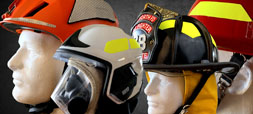
Victor Conley: Yeah. The only other thing I'd like to throw out here if I have an opportunity is some of the equipment. We make our firefighters wear high visibility reflective vests, but we also, with the research that Lieutenant Robinette did in Lubbock, all my firefighters have a second helmet, which is basically a technical rescue helmet at this time to wear on roadways. They've all been issued out, and they've all have their own helmets. So I make sure that they have those helmets instead of wearing their fire helmets.

Jack Sullivan: Have they adapted to that idea?

Victor Conley: Oh, they love it. Yeah, they love it. Yeah.

Jack Sullivan: Yeah. I think we're trying to get some of the manufacturers, when I say we're trying we are talking to the manufacturers, and asking them to step up, and using the new ASTM standard that was developed for a roadway incident safety helmet to build some prototypes and get them out there. We knew it was going to take a while. It's been over a year. I expect it'll be another year before we see anybody dip their toe into the market, but they all had the same question. We got to understand how much money we might make out of designing and building these helmets before we take on that process. How many do you think people might buy? There's no way for us to answer that question. I don't know how we'd ever be able to do that accurately. I know they're looking at it, they're trying to figure out what the best way is to approach it from a business standpoint. We're going to keep encouraging them, and asking folks to keep asking for them so that hopefully we'll see some changes in the type of helmets that are available in the near future.

Victor Conley: Yeah. I think part of the responsibility is on us as well. We need our NFPA, and the studies that have been done, UL, to start putting this as a requirement tool, and to cash for firefighters. We've got the bunker gear, and we got the bunker helmet, we've got our face pieces, our hoods and all that, this just needs to be another piece of equipment that's required to be issued for personnel because the fire helmets, they don't do us any good out on the roadway.

Jack Sullivan: Yeah.

Victor Conley: The first thing we do, quite frankly, because it hangs up on everything, is we take them off and throw them on top of the cab of the vehicle while we're climbing inside trying to help the people.

Jack Sullivan: Guilty. I've done it myself.

Victor Conley: We all are. I think as much as we need them to start putting these helmets out on production, we need to, on the fire side, require people to have that extra piece of equipment in their bags as well.

Jack Sullivan: Yeah. So as we start to wrap up, I guess one of the last questions that typically comes up as I talk about your program, smaller departments won't necessarily have the resources or financial situation that you folks have in Irving, if you could, can you describe what the cost might be for a typical retrofit? As you pull one of these frontline apparatus out and make it a reserve apparatus, and move it to the blocker program, how much money do you actually put into it to make the changes with the signboards, the arrow boards, and filling the water tank and things like that? What's the total cost on that?

Victor Conley: Well, our original concept, which was signboard on three sides, and putting the poly product in the tank is less than 3,500 bucks, and we move those boards from one to another. What I would say with some of these volunteer departments or smaller ones, here in Irving, we actually donate equipment to volunteer departments here in the state that are in need of some equipment. I've got the support of my city manager to do that. But if I'm in a volunteer department, if you can buy a three or $5,000 apparatus at auction or get an old dump truck from your city yard or whatever, there's still ways to get it done and to get your people to respond with that to protect you out on the roadway. It can still happen, but keep your expenses minimal, and that's what we've tried to do. Now, the signboards I've added in the back, that was about a $20,000 hit, but I still move that sign from one apparatus to another. So barring anything going out on those boards, they'll last us a while, and they've actually come out and beefed up everything because we do have them on apparatus at respond, beefed up the welds and the size of the bolts and the pipes, and all that kind of stuff. I think we got a pretty good product. There's been some others rolled out in the state that are using these signboards now since the company came out and worked with us. For the smaller departments, I still think there's a way that it can be done in the community, use your creativity to get it done to protect your people and your front ... I mean, your frontline equipment in these smaller departments are probably more important than they are the bigger ones because we can rotate equipment in and they can't do that. I mean, they've worked their tails off to get enough money just to buy one, and still need help doing it. So I think it's even more imperative for some of these smaller departments to find something heavy that can protect their people in their apparatus while they're out there helping the community.

Jack Sullivan: Yeah, I cringe a little bit when I see some of the departments take delivery on a brand new aerial piece of some sort, the first thing they do is use it as a blocker out on the highway.

Victor Conley: Yeah. Yeah.

Jack Sullivan: I know what they're trying to do, I know why they're doing it, and I'm always trying to suggest a better solution for them one way or the other.

Victor Conley: Yeah. Those things are getting up close to $2 million now.

Jack Sullivan: Easily, and taken almost five years in some cases for delivery.

Victor Conley: That's correct.

Jack Sullivan: Yeah. Okay. Your information has been extremely valuable. I can't tell you how many people have asked about your program in Irving, and really appreciate you taking the time to spend with us today to tell us about the program, talk about its success, and maybe give some other departments an idea of what they might be able to do in their particular first run district too. So Chief, as always, I enjoy talking with you, and thank you for sharing time with us today, and Rod, I'm going to hand it back to you.

Rod Ammon: Well, I just want to say thanks to both of you gentlemen. Chief, thanks for your leadership with the blocking issue, and now with roadway helmets for your firefighters. You also provided some great written detail that we're going to share in the resources, and Jack, thanks for taking the lead. You made my job easy today. I sat back and just learned. So to both of you, I hope you have a good new year, and I'm grateful for your time.

Victor Conley: Well, Rod, thank you. Thank you very much for having me on. Jack, you've always been a fan. You reached out to me when I first rolled this program out. You've supported me and promoted our program around the country. All I want is for our fighter fighters, EMS, record drivers, and police officers to be safe out on the scene. Nothing is worth losing a first responder over, period. I think with you rolling these programs out, and hopefully there'll be a better one around the corner, but you've been a fan, and I want to thank you for that. Thank you, Jack.

Jack Sullivan: Glad to do it, and happy to have something that I think is practical, economical, and effective that we can share with others around the country. We already know that others have duplicated it, maybe this program will help get the message out to some other people and they'll do it too.

Victor Conley: Yes, sir. Well, thank you all very much.

Rod Ammon: Thank you, sir. By the way, our blocking module on the RSLN is a popular module, and it's free for you and any of your team. Be sure to check out the resources on this podcast page on rsln.org because Irving Fire Department shared their emergency operations guidelines for traffic incident management that includes specifics on their use of blockers, as well as a tip sheet for how they outfit their blocker units. Now for the news from respondersafety.com. The Responder Safety Learning Network module on helmets and head protection has been updated to reflect the release of ASTM E3422, standard specification for protective helmets worn by pedestrian roadway workers. This first of its kind standard sets manufacturing requirements to create a helmet specifically for the hazards of roadway incident response. The new Helmets and Head Protection for Roadway Incidents 2025 is now available. If you pass the previous version, the entry will remain on your transcript and you'll be able to download your pass certificate. We encourage you to take the new version to update your knowledge as the module content has been significantly revised. A link to Helmets and Head Protection for Roadway Incidents 2025 is in the link section of this episode's page on RSLN.org. A new article by Joe Kroboth III and Jack Sullivan is available on respondersafety.com that analyzes the traffic incident management aspects of a six-fatality multi-vehicle collision, and post-crash fire on Interstate 70 that occurred in November 2023 in Ohio. A link is on this episode's page on RSLN.org. Todd Leiss, assistant director of training for the Emergency Responder Safety Institute, has authored a call to action editorial in response to the struck-by deaths of nine emergency responders in less than one month this past fall. Read his powerful words about how driver choices are causing these preventable deaths. A link is on this episode's page on RSLN.org. If you know of an incident where an emergency responder vehicle or a responder was struck while operating at a roadway incident, please report it at reportstruckby.com. We're collecting these reports to better understand how struck-by incidents occur so we can determine what training, public education, and safety messaging is needed to reduce struck-by incidents. Anyone can file a report. You can report anonymously. Reports from all response groups are accepted. Remember to connect with us on social media for timely updates on news on emergency response and respondersafety.com activities. Like and follow us on Facebook at facebook.com/roadwaysafety, on Instagram at instagram.com/respondersafety, and on X at x.com/respondersafety. This podcast, respondersafety.com and the Responder Safety Learning Network are made possible by funding from a fire prevention and safety grant from the Assistance to Firefighters Grant Program administered by FEMA and the US Department of Homeland Security. We appreciate your support, and remember to share these podcasts with your colleagues to spread the word about safety practices at roadway incident scenes. Thanks for joining us today on the podcast. Stay safe, everybody. We'll see you next time. For respondersafety.com, I'm Rod Ammon.

2025
Episode 15: Seatbelts with Christy King - Christy King’s son, Christopher, was killed in a car crash on July 4, 2020, shortly after he graduated from high school.
Episode 14: Jamie Drawbaugh and Interacting with the Public - On June 12, 2023, Chief Jamie Drawbaugh of the Montgomery County Fire and Rescue Service in Maryland responded to a minor vehicle crash as the mutual aid first due paramedic engine. Moments later, he was interacting with an agitated driver when that driver took off. Chief Drawbaugh was dragged by the vehicle and nearly run over.
Episode 13: Digital Alerting with Hanover County Fire-EMS, VA - With us here today to discuss how Hanover County Fire-EMS implemented digital alerting and what their experience has been with it over the last three years are Battalion Chief Matthew Stainback and Lt. Jacob B. Smith from the department and Matt Phillips, Safety & Risk Manager for the Hanover County Government and Hanover County Public Schools.
Episode 12: Safe Teen Driving With Tammy Guido - Episode 12: Safe Teen Driving With Tammy Guido
Episode 11: ASTM Helmet Standard with Brady Robinette - Episode 11: ASTM Helmet Standard with Brady Robinette
Episode 10: Move Over with Melanie Clark - Our guest today knows the pain of a struck-by line-of-duty death. On October 11, 2018, Hanover County Fire-EMS experienced the tragic LODD of Lt. Brad Clark when he was struck and killed assisting at a crash scene. Lt. Clark’s wife, Melanie, has made it her life’s mission to carry on his legacy.
Episode 9: Commercial Electric Vehicles with Tom Miller - Tom Miller is with us today to talk about commercial electric vehicles.
Episode 7: A conversation with Chief Anthony Correia on Crew Resource Management - Chief Anthony Correia demystifies the concept of crew resource management and how you can apply it your organization’s roadway incident responses.
Episode 6: A conversation with Cindy Iodice Founder and CEO of Flagman Inc. - Flagman is a non-profit organization that promotes awareness of Slow Down Move Over through K-12 education outreach initiatives.
Episode 5: Towing and Recovery with Angela Barnett and Brian Riker - On the newest episode of the ResponderSafety.com podcast, Angela Barnett, Executive Director of the Arizona Professional Towing and Recovery Association, and Brian Riker, Executive Director of the Pennsylvania Towing Association, join us to talk everything towing and recovery — training, relationships on-scene with other emergency response organizations, incident command and management, protecting tow operators when they work, public education, and the biggest issues facing the profession in roadway incident response.
Episode 4: Secondary Crashes: Lessons from the NTSB - Our guest on the newest episode of the ResponderSafety.com podcast is Investigator Sheryl Harley of the National Transportation Safety Board’s Office of Highway Safety. Investigator Harley speaks with us about the NTSB’s role in investigating all transportation-related incidents, how they decide which incidents to investigate, and what happens during an investigation.
Episode 3: Rich Marinucci - On Episode 3 of the ResponderSafety.com podcast, Chief Rich Marinucci, Executive Director of the Fire Department Safety Officers Association (FDSOA), offers his take on the biggest safety risks to firefighters today, the role of the safety officer at roadway incident responses, why preventable deaths from operations like backing up apparatus are still happening, and the FDSOA’s new Certified Traffic Incident Management Technician credential.
Episode 2: Loveland-Symmes - Today we're going to take a closer look at the emergency services unit of the Loveland-Symmes Ohio Fire Department.
Episode 1: In the Beginning - Steve Austin and Jack Sullivan from the Emergency Responder Safety Institute discuss how the organization and ResponderSafety.com got started and plans for the future. Bob Beamis of the Pennsylvania State Police recounts his experience being struck and injured while working at a roadway incident scene.